
What Information Should Be Included in a Furniture Specification?
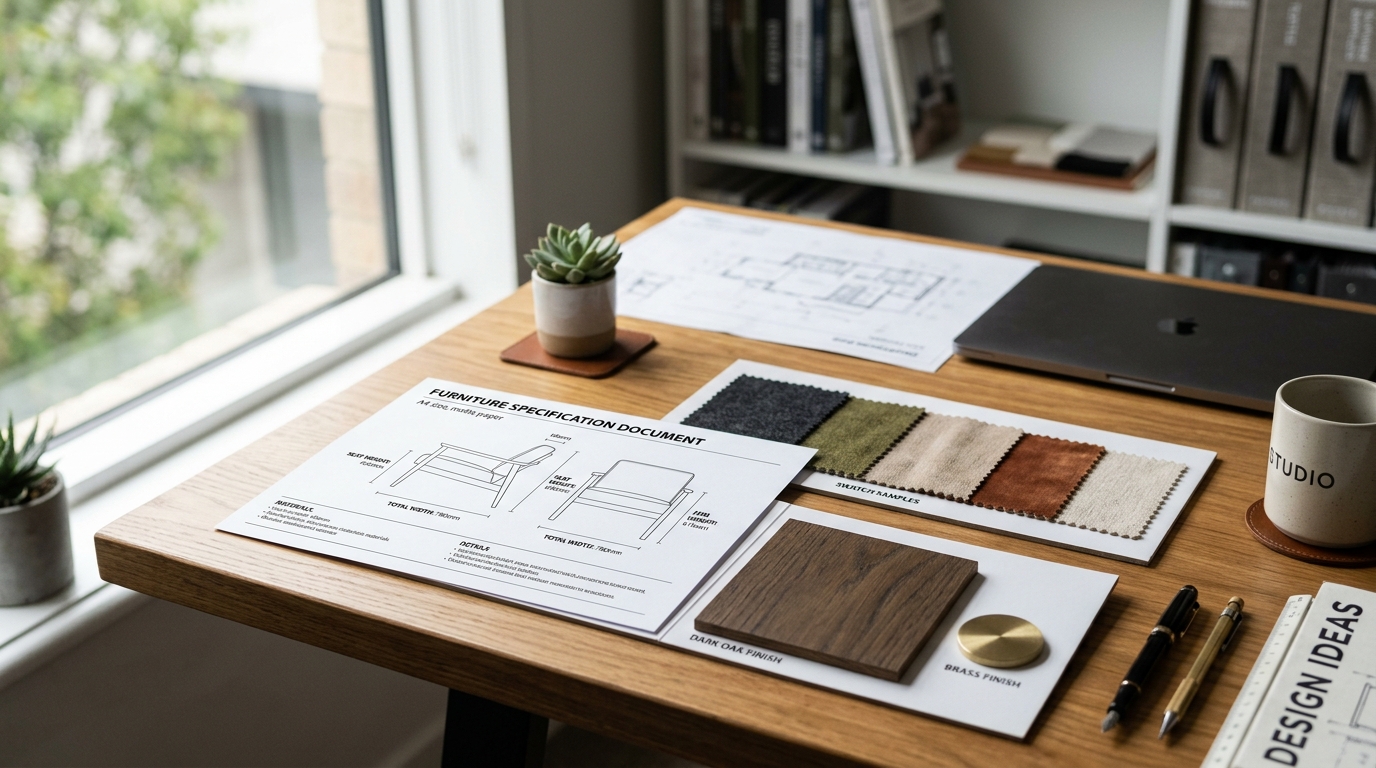
A clear specification is what turns a design intent into the right furniture, delivered on time, with no surprises. A vague one causes wrong finishes, missed power requirements and awkward conversations at delivery. This checklist covers the information a furniture specification should capture for each item.
Product identity and quantity
Record the range or product name, the manufacturer, a product code where one exists, and the exact quantity. If the same product appears in several finishes, list each finish variant as its own line with its own quantity so there is no ambiguity.
Dimensions
State the overall dimensions, width, depth and height, and any critical details such as seat height, tabletop thickness or worktop depth. For configurable products, give the exact size you want built rather than a range. Dimensions also matter for access: confirm the item will fit through doors, lifts and corridors on the delivery route.
Finishes, in full
This is where most errors happen. Specify every finish explicitly: the top/surface decor, the frame or leg finish, and the upholstery. For upholstery, record the fabric name, the exact colourway and the grade, plus the fire rating required for the setting. A finish reference code is far safer than a colour name like "grey".
Performance and compliance
Note the requirements the product must meet: fire rating (for example Crib 5 to the relevant BS 7176 hazard category for seating), abrasion rating for fabric, and any certification the project requires such as FSC-certified board. If the setting is healthcare or education, capture any sector-specific requirements here.
Power, data and accessories
For desks and meeting tables, specify the power and data modules, the number and type of outlets (including USB-C), and the cable-management method. List any accessories, screens, cable trays, brackets, castors, as separate items so nothing is assumed.
Delivery, installation and logistics
State the delivery address, any access constraints, whether installation and build are required, and who removes packaging. Capture the required delivery date or window, and note if delivery is phased across a programme.
Commercial and reference information
Include the agreed price or reference to the quotation, the lead time, the warranty, and references to supporting documents, the CAD or BIM file, the specification sheet and any approved sample. Linking the specification to these assets keeps everyone working from the same information.
If you would like a head start, our product and range pages carry the dimensions, finishes and downloadable specification sheets you need to build an accurate specification, and our team can confirm configurations, ratings and lead times for your project.
Planning a project? Our team can help you specify the right products, finishes and lead times.
Talk to our team