
How to Specify Fabrics for Commercial Seating
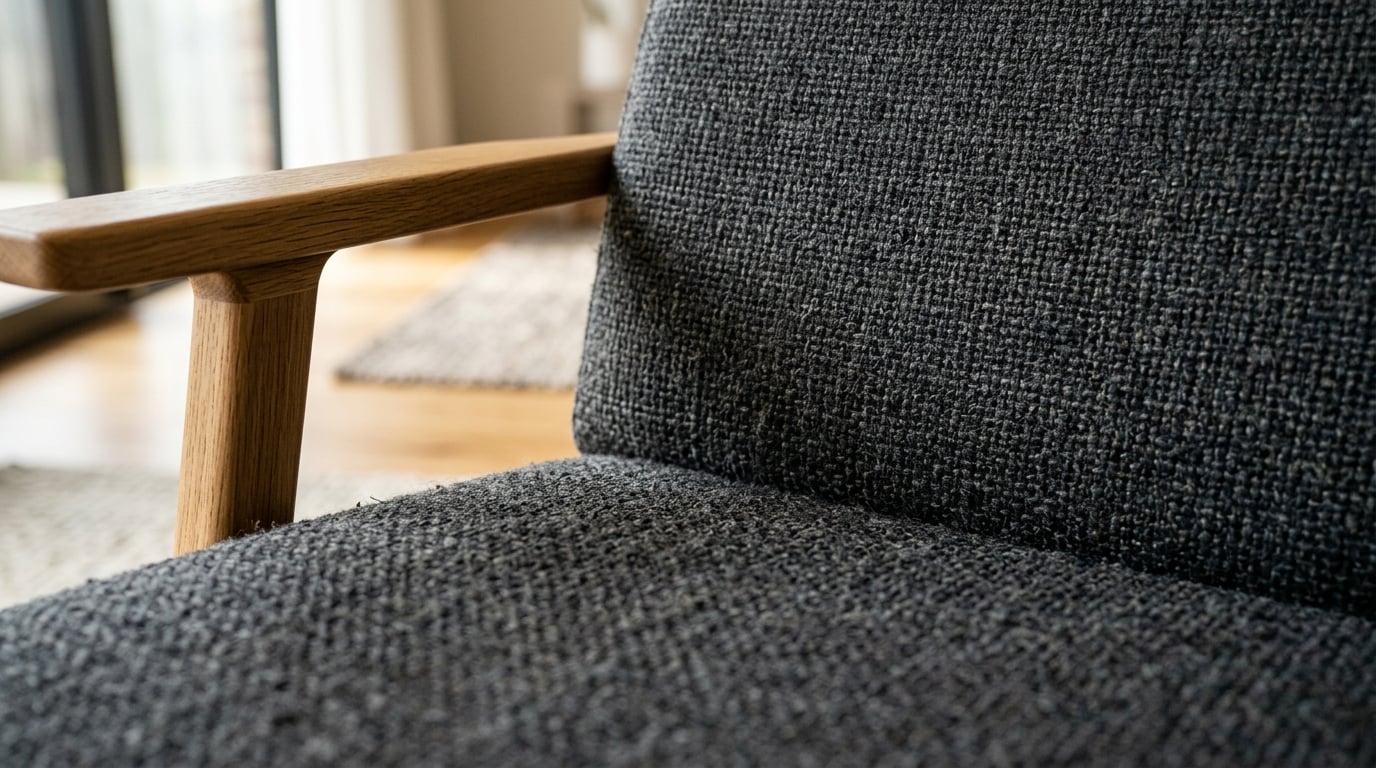
Upholstery is where a lot of specifications quietly go wrong. A fabric that looks perfect on a sample board may not be rated for contract use, may fail fire requirements for the setting, or may be impossible to keep clean in a busy environment. Here is how to specify commercial seating fabric with confidence.
Confirm it is contract-grade
Domestic fabrics are not built for the wear a workplace, hospitality or healthcare setting delivers. Contract-grade fabrics are tested for abrasion, fire performance, colourfastness and pilling. The first question for any fabric is simply: is this rated for contract use, and does the supplier hold the test data?
Check the abrasion rating (Martindale)
Abrasion resistance is measured by the Martindale rub test. For general contract seating look for at least 40,000 rubs; for heavy-use settings such as reception, canteen or public areas, higher is better. Our dedicated guide to Martindale and Crib 5 explains the numbers in more detail.
Get the fire rating right for the setting
Commercial upholstered seating in the UK is generally specified to BS 7176, which sets low, medium and high hazard categories. Most offices fall under medium hazard, which typically requires the fabric-and-filling combination to pass the Crib 5 ignition source. Do not assume a fabric is compliant, request confirmation of the fire test for the specific fabric and filling combination.
Match the fabric to how it will be cleaned
In healthcare, care and some hospitality settings, seating needs to withstand regular disinfection. Here, wipe-clean vinyls, polyurethane faux leathers or fabrics with a moisture-barrier backing are often the right answer. In a standard office, a durable woven fabric is usually fine. Always check the manufacturer’s cleaning code so the facilities team can maintain it correctly.
Consider colour, texture and the long view
Darker and mid-tones and textured weaves hide marks and wear better than pale, flat fabrics in high-traffic areas. Think about how the fabric will look after two years, not just on day one. Coordinating a small number of fabric families across a scheme keeps a space coherent and simplifies reordering.
Practical specification tips
Order a physical sample and, ideally, see it on the actual product. Record the exact fabric name, colourway and grade in your specification so there is no ambiguity at order stage. If you are using your own (customer’s own material) fabric, confirm it is suitable and fire-compliant for the frame it will cover. Our team can advise on suitable fabrics across our seating ranges and confirm ratings for your setting.
Planning a project? Our team can help you specify the right products, finishes and lead times.
Talk to our team