
How to Specify Office Furniture with Integrated Power
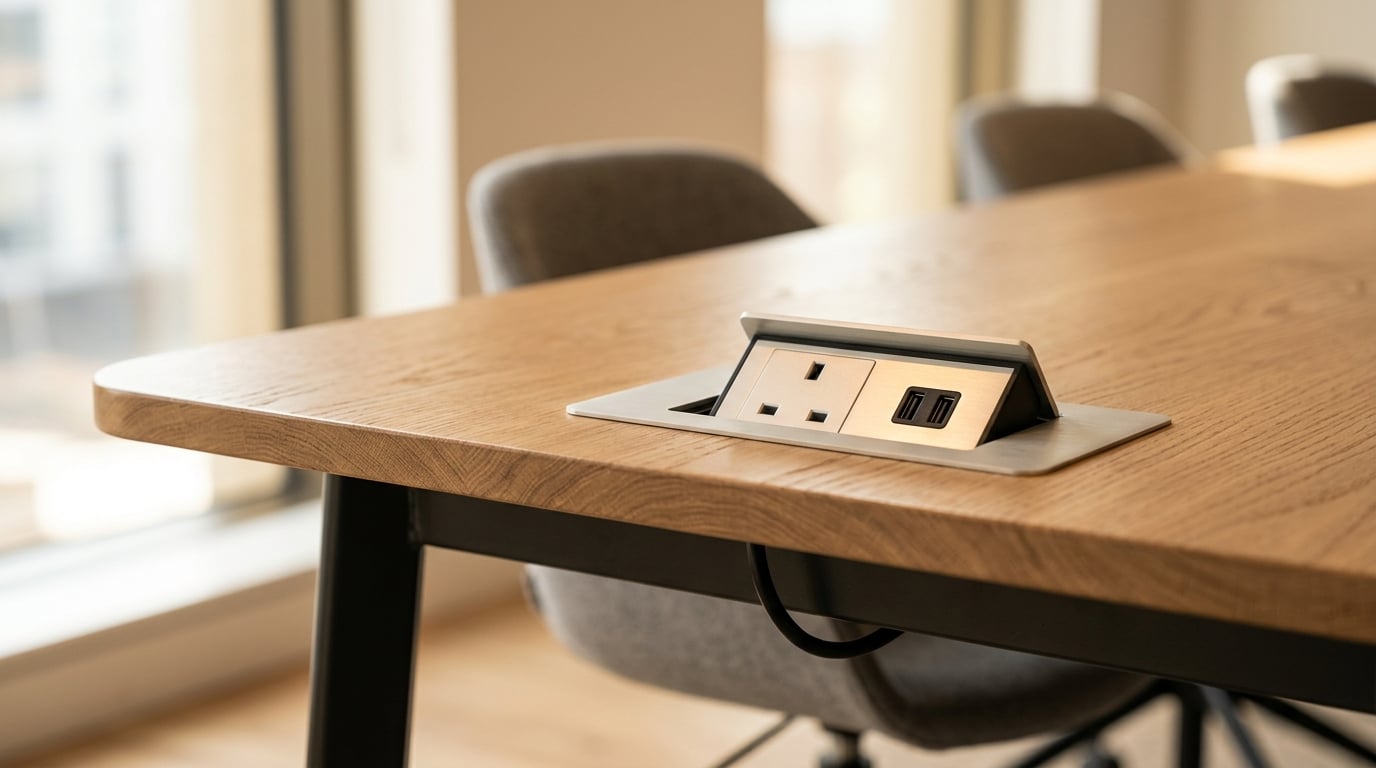
Almost every desk and meeting table now needs to deliver power and data to the people using it. Specifying that properly at design stage is far tidier and cheaper than retro-fitting it later. Here is what to think through.
Decide the type of power unit
There are three common formats. In-surface modules sit flush in the tabletop and are neat and permanent. Pop-up or flip-up units hide below the surface and lift up when needed, keeping the top clear, popular on boardroom tables. Above-surface or clamp-on units fix to the desk edge and are the easiest to add or move on bench desks. Choose the format based on how visible you want the power to be and how often people plug and unplug.
Specify the outlets people actually need
A typical module combines UK 13A sockets with USB-A and USB-C charging. USB-C is increasingly the priority as laptops and devices standardise on it, so make sure there are enough USB-C outlets rather than mostly legacy USB-A. For meeting tables that host video calls, include data or HDMI connectivity where the AV design requires it.
Plan the cable route to the floor or wall
A power module is only half the specification, the cables have to reach a floor box or wall socket cleanly. Specify how: through a cable port or grommet in the top, down a cable spine or cable tray on the frame, and into the building’s floor box or dado. On bench desks, a shared cable tray running the length of the bench keeps everything off the floor. Confirm the floor box positions with the base build early.
Get the electrical compliance right
Factory-fitted power modules are supplied as pre-wired units that a qualified electrician connects to the building supply. The final connection and testing must be carried out by a competent person and certified. Where multiple desks are daisy-chained, confirm the number of units allowed on a circuit with the electrical contractor. Never treat furniture power as something that can simply be plugged in without electrical sign-off.
Coordinate with the wider fit-out
Furniture power has to line up with the floor boxes, the AV design and the desk layout. The most common failure is a beautiful table with power in the wrong place because the floor box was set before the furniture was chosen. Share the furniture power plan with the M&E and AV teams so the routes and positions agree.
Our desks and meeting tables can be configured with a range of power and data modules and cable-management options. Tell us the layout and the outlets you need and we can specify compatible units and advise on cable routing.
Planning a project? Our team can help you specify the right products, finishes and lead times.
Talk to our team